
Para hacer una donación segura en línea, haga clic en el siguiente botón

On May 20, 2026, the Auschwitz Institute for the Prevention of Genocide and Mass Atrocities (AIPG) marks the annual National Day of Remembrance for the Cambodian Genocide. This day serves as a reminder of the atrocities that occurred between 1975 and 1979, when the Khmer Rouge regime—formally known as Democratic Kampuchea—under the leadership of Saloth Sar (better known as Pol Pot), presided over the deaths of an estimated 1.7 to 2.2 million people. This staggering loss represented approximately 25% of the country’s population. Death resulted from a combination of state-sponsored executions, forced labor, disease, and man-made famine. The Cambodian Genocide is recognized as one of the deadliest atrocities of the 20th century.
The Khmer Rouge sought to transform Cambodia into a classless, agrarian utopia through an extremist Maoist ideology. Declaring “Year Zero,” the regime abolished private property, currency, and religious practices. The regime targeted perceived "enemies of the revolution," including intellectuals, professionals (such as doctors and teachers), and ethnic and religious minorities, most notably the Cham Muslims, ethnic Vietnamese, ethnic Chinese, and the Buddhist monks.
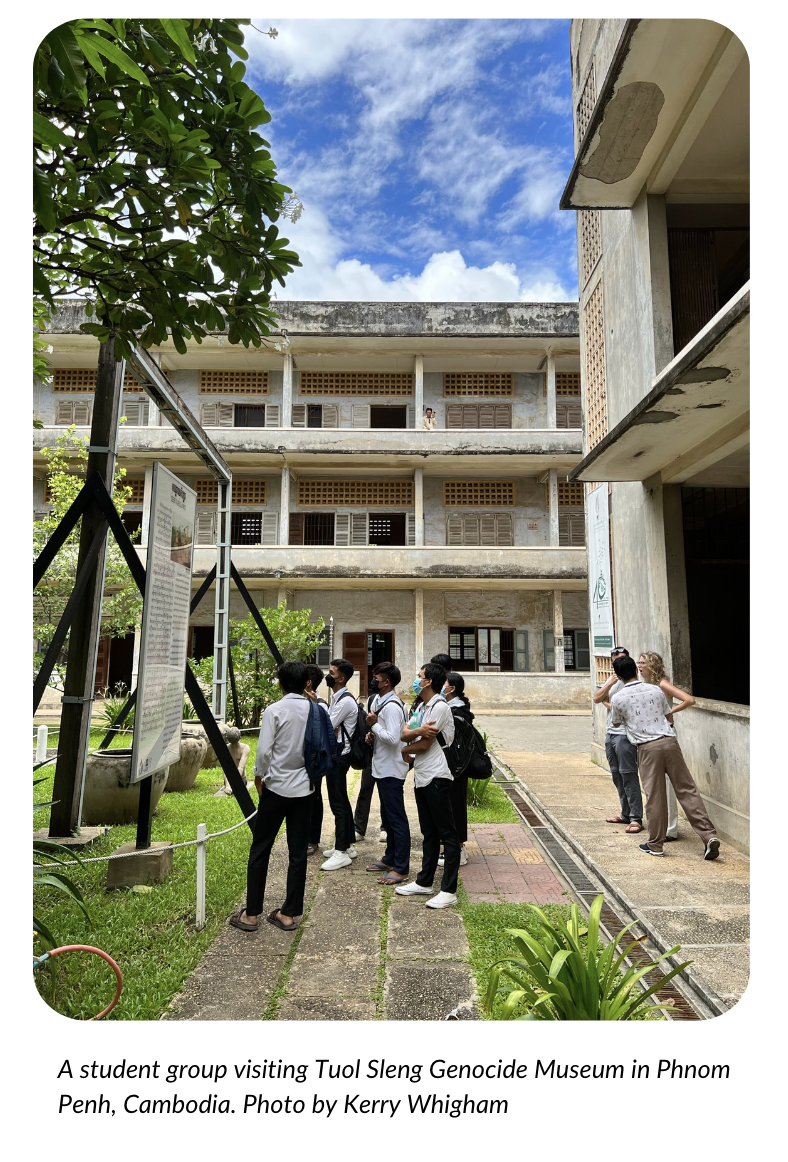
The significance of May 20 dates back to 1984, when the day was established as a “Day of Hate” to commemorate the start of the mass killings in 1975. In 2018, the Cambodian government officially renamed and designated the day as the “National Day of Remembrance” (Sub-decree No. 19). While the day once focused on expressing anger toward the previous regime, it has since evolved into a day of public education and religious ceremonies. Many Cambodians visit memorial sites, such as the Choeung Ek Genocidal Center, to offer prayers for the deceased and ensure that younger generations understand the gravity of this history.
In the pursuit of justice, the Extraordinary Chambers in the Courts of Cambodia (ECCC) was established in 2001 as a hybrid UN-Cambodian tribunal. Over its two-decade tenure, the court successfully convicted senior leaders including Kaing Guek Eav (Duch), Nuon Chea, and Khieu Samphan for crimes against humanity and genocide. Although the ECCC completed its judicial caseload in 2022, it continues its "residual phase," focusing on victim support and the preservation of its archives to serve as a permanent record of the truth.
The Auschwitz Institute stands in solidarity with the survivors and the Cambodian diaspora. We reaffirm our commitment to the principle of "Never Again" by supporting education and policy initiatives that identify the early warning signs of mass atrocities, ensuring that the lessons of the Killing Fields are never forgotten.